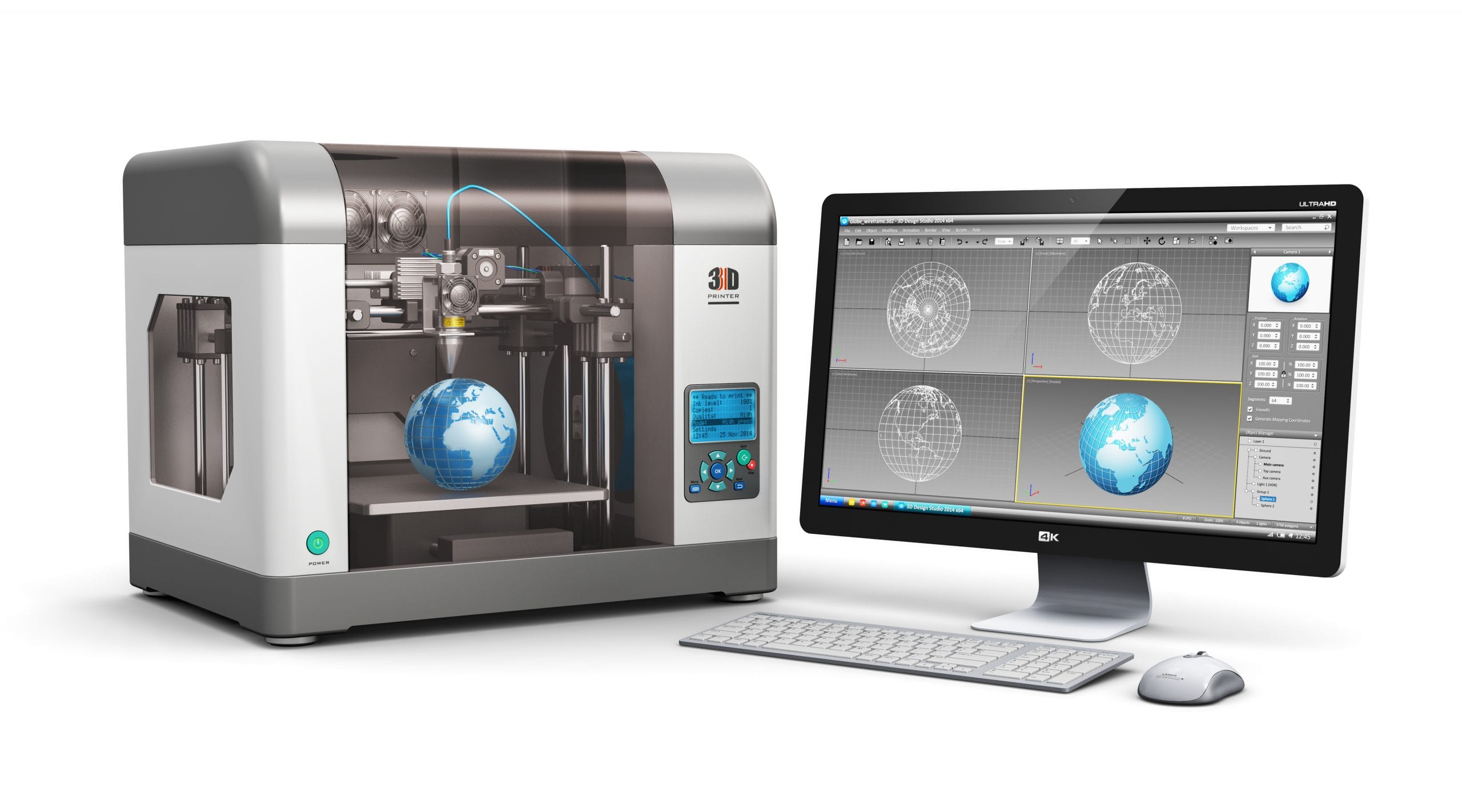
Have you heard of 3D printed foot orthotics? 3D printing (three-dimensional printing) for the manufacturing of foot orthotics is an excellent way to obtain high-quality orthopedic orthotics. If you currently wear or are considering wearing foot orthotics, you are likely aware that intense foot pain is associated with mobility difficulties and the limitation of many everyday activities, especially in older adults. Discover how 3D printing enables the creation of custom-made foot orthotics that are much more comfortable and precise.
What is a 3D Foot Orthotic?
A 3D foot orthotic is an orthotic created from a scan of your foot, also called a scanning scan. Your foot is fully scanned, and a 3D image of your foot is generated. The resulting image is sent to a foot orthotic manufacturing laboratory, like Skeltec, which converts it into a foot orthotic and then prints it in 3D.
3D printed custom orthotics have advantages over traditional orthotic manufacturing. Thanks to 3D printing, it’s possible to reproduce the shape of your foot with much more precision than with traditional methods. By scanning your feet, it’s possible to model orthotics tailored to your feet, down to the millimeter. You thus get a much thinner, more comfortable, and durable orthotic. If you already wear foot orthotics, you may be familiar with the traditional plaster casting technique, foam box, or wax molding. With the 3D printing technique, the process is much quicker; the podiatrist places your foot, takes an impression, and then repeats the process with the other foot. The data is then transmitted to a foot orthotics laboratory. During your next visit, feel free to ask your professional about 3D foot orthotics.
The Benefits of 3D Foot Orthotics
Wearing a 3D printed foot orthotic ensures the comfort and support necessary to go about your daily activities without pain or discomfort. Molded foot orthotics are especially useful for reducing foot, knee, or back pain. A well-fitting, custom foot orthotic can also help stabilize a deficient gait in elderly or injured individuals. Thus, the optimal fit provided by a 3D printed foot orthotic gives you confidence and security.
If you engage in sports, 3D printing allows for the design of thin, comfortable orthotics that fit your feet perfectly. This helps improve performance while preventing potential injuries or aiding in the recovery process after an injury. The custom 3D printed foot orthotic takes your foot’s specificity into account. By correcting foot positioning, the orthotic helps improve posture and balance. The 3D imprint analyzes the entire surface and volume of the foot with great precision. The process is quick and painless, resulting in fully personalized foot orthotics.
Another significant advantage of 3D printed foot orthotics is the time savings. Indeed, scanning your feet with a 3D scanner takes just a few minutes, and the data is easily transmitted to the laboratory. As a result, you receive your new orthotics much faster, and they fit better than your old ones.
Finally, 3D printed foot orthotics are the most eco-friendly solution available on the market. There is a 90% reduction in environmental footprint during manufacturing, and the orthotics are 100% recyclable at the end of their life!
Talk to Your Podiatrist About Skeltec Foot Orthotics
Don’t settle for just any foot orthotics; talk to your foot professional about Skeltec’s 3D printed foot orthotics. Regain your mobility and the ability to do the activities you love with Skeltec’s 3D printed foot orthotics made in Quebec by specialists in 3D foot orthotic manufacturing.
Skeltec is a foot orthotic manufacturing laboratory certified by the Ministry of Health. For your professional, the technique is simple and easy to use: they can scan your foot’s imprint with an iPad and transmit it to us via our web app designed for that purpose. We create your custom foot orthotics without intermediaries, in our laboratory, using state-of-the-art equipment. Does your podiatrist know Skeltec?
For podiatrists and orthotists, the process of making 3D foot orthotics is certainly interesting to learn about. The 3D manufacturing used for creating foot orthotics is a much more comfortable and faster technique than traditional molding methods. In this article, we will cover the various steps involved in the production of a 3D foot orthotic. Keep reading to learn more.
What is a 3D Printed Foot Orthotic?
The production of 3D printed foot orthotics has several advantages over traditional foot orthotic manufacturing. 3D printing allows for the production of personalized shapes and geometries that are impossible to create with traditional techniques. An iPad equipped with a 3D sensor is used to capture the foot’s imprint, which is then transmitted to the laboratory via a web portal. Using their account on the laboratory’s web portal, each professional can track the progress of their patient’s orthotic production in complete confidentiality. The orthotics can be made faster and are easier to modify and reproduce. Additionally, since the imprint is permanently stored on the portal, it can be easily accessed anytime for consultation, reproduction, or modification.
The 3D manufacturing process offers advantages compared to the traditional method of using plaster molds to obtain a negative of the patient’s foot, which is then used to mold a replica of the foot. The traditional plaster molding process is messy, time-consuming, and environmentally harmful. With 3D printing, manufacturers can move from scanning the patient to creating the model in less time and with less labor. Let’s discuss the benefits of 3D printing for making foot orthotics in more detail.
The Advantages of 3D in Foot Orthotic Manufacturing
Among the many advantages that 3D printing offers for foot orthotic manufacturing, we can highlight the time and cost savings in the production of orthotics. This manufacturing method creates almost no waste, meaning less material usage and more money saved on production costs. Furthermore, since the orthotics can be customized to fit any type of foot or condition, this system offers much better adaptation than traditional molding techniques. This results in fewer complaints about comfort after purchase. The risk of errors is significantly reduced, and the quality of the foot orthotics is greatly improved.
For patients, having foot orthotics that are better adapted to their foot issues can make a real difference in their quality of life. Moreover, 3D printed foot orthotics are thinner, providing more comfort for the patient.
Steps in the 3D Manufacturing of Foot Orthotics
The manufacturing of 3D foot orthotics occurs in a few steps, beginning with the imprinting process. The imprinting process is simple: a 3D scan of each foot is performed by the foot professional using an iPad equipped with a 3D sensor, as mentioned earlier. The professional then applies necessary corrections or retakes the imprint if not satisfied. The files are then transmitted to the laboratory for design.
The design of the orthotics is then carried out by certified orthotists-prosthetists using a unique and innovative design software developed exclusively for Skeltec, which transforms the image into orthotics with a precision of one millimeter. Next, the 3D printing of the orthotic and the application of a durable finishing process that enhances its mechanical properties are carried out. For the finish, the 3D orthotic can be worn as is or covered with several materials, including EVA foam (Ethylene-Vinyl Acetate), which is very popular for its durability, lightness, and resistance. The finishing step is the last stage of the 3D foot orthotic production: it can be performed in the laboratory or by the professional in the clinic.
Unmatched Precision in Foot Orthotics
Why choose Skeltec for your next foot orthotic investment? The cutting-edge technology we use allows us to provide a turnkey service, from image acquisition and 3D modeling to the printing of foot orthotics, all without any intermediaries. You get 3D printed orthotics made from ultra-durable materials that do not wear out over time. If you want to learn more about how Skeltec can help your practice using 3D printing technology, find a clinic today!
Are all 3D printed foot orthotics truly custom-made? This is a question often asked, especially when considering products available at pharmacies. The answer is no. While 3D printing of foot orthotics is certainly a revolutionary manufacturing method in the world of personalized medical devices, not all 3D printed foot orthotics are custom-made. The level of customization varies depending on the software used by foot orthotics manufacturing laboratories. In reality, some manufacturing methods do not take all the necessary criteria into account to create fully custom-made foot orthotics. Keep reading to find out how 3D printed foot orthotics are made fully custom for you.
3D Technology at the Service of Foot Professionals
For podiatrists and orthotists, 3D printed foot orthotics offer the opportunity to provide more services to their patients by allowing them to perform foot scanning directly in the clinic. When starting an evaluation to prescribe foot orthotics, the process begins with a physical evaluation of the foot and gait, as well as some questions about the lifestyle to ensure that each patient receives the right solution, whether they are an avid runner or need to be on their feet all day at work. Most people’s feet fit into a standard shoe size, but it is unlikely that both feet are dynamically identical. Thus, each foot probably requires a different level of correction. This is why 3D printed foot orthotics provide precise customization for each of your feet.
The beauty of 3D printed foot orthotics is that they fit perfectly to the contour of each of your feet to meet your unique needs. Scanning the foot with an iPad equipped with a 3D sensor allows for a precise impression of your feet. The modeling software, in turn, creates a 100% custom digital foot orthotic that serves as the basis for the production of fully custom 3D printed foot orthotics. You can therefore be assured of receiving a high-quality foot orthotic that will provide lasting comfort and stability.
Different Types of 3D Printed Foot Orthotics
It is important to distinguish between fully custom 3D printed foot orthotics and over-the-counter or partially custom foot orthotics. Indeed, over-the-counter foot orthotics are mass-produced based on shoe size. They serve more as orthotics to be inserted into a shoe or boot or as foot arch supports. Since they are mass-produced in large quantities, they are obviously much cheaper than fully custom 3D printed foot orthotics. On the other hand, some laboratories use modeling software that only takes certain criteria into account and does not perform a complete 3D modeling. Commonly referred to as 2.5D, these orthotics appear to be custom-made but are not truly 100% tailored. These are known as partially custom foot orthotics.
However, do these pre-made or partially custom foot orthotics really meet your needs? By consulting a professional equipped with the tools for scanning and 3D modeling, you can receive a professional evaluation of your feet and foot orthotic needs.
Custom-made foot orthotics come in several forms, and thanks to 3D scanning, it is possible to obtain foot orthotics perfectly adapted to your situation. For example, there are custom orthotics for children, which help prevent or correct certain biomechanical deficiencies. Custom foot orthotics for diabetics help prevent the formation of sores or lesions resulting from the disease. As for athletic foot orthotics, they are designed to support the feet and improve the performance of runners. The accommodative foot orthotic is suitable for seniors suffering from osteoarthritis and is designed to prevent the risk of falls. Finally, the short foot orthotic, used for various foot problems, is the most versatile. Over-the-counter or partially custom orthotics logically cannot provide a lasting solution to specific problems.
For Fully Custom 3D Printed Foot Orthotics
Skeltec manufactures fully custom 3D printed foot orthotics. Unlike some laboratories, we take all the necessary criteria into account for producing fully custom foot orthotics. Additionally, our orthotics are made by certified orthotists-prosthetists, and we are always on the lookout for the latest innovations in the field of fully personalized 3D printed foot orthotics.
Do you have an appointment with your foot professional? Talk to them about Skeltec to get fully custom 3D printed foot orthotics!
3D foot impressions for orthotics are the most precise technique in the field of orthotics manufacturing. Whether for making orthotics for the feet, tibia, or knees, the two main measurement techniques are plaster molding and 3D impression taking. Continue reading to learn more about 3D plantar digital imaging.
What is 3D Foot Impression?
The aging population has caused the demand for high-quality orthotics to grow exponentially. The question of creating high-precision orthotics is therefore increasingly relevant, and one solution lies in 3D foot impressions. This technique provides a much more precise image of the foot than traditional methods. As a result, it has become essential for foot professionals to familiarize themselves with 3D foot scanning to make their work easier and improve their treatments.
What does 3D impression taking involve?
3D impression taking involves using a specialized spatial acquisition sensor. This type of sensor is precise to within 1mm and can be connected to an iPad. Additionally, the use of specialized software allows the analysis of the sensor’s data to digitally recreate the foot’s shape. The resulting image is more accurate than traditional techniques recognized in the field.
What is the difference between 3D Foot Impressions and Conventional Techniques?
The 3D foot impression technique developed by Skeltec uses a 3D sensor and provides greater precision than conventional techniques. The latter, which can involve plaster molds, foam boxes, wax, or fiberglass, do not offer the same level of precision as 3D foot scanning, which produces an exact image of the foot that can be used digitally to capture every detail of the foot’s contours.
What are the Benefits of 3D Foot Impressions?
3D foot impressions, or digital 3D plantar imaging, offer a significant number of benefits, starting with the level of precision and real-time visualization of the impression. By recreating the morphology of each foot, we get a more faithful image and a result with unparalleled precision. Digital foot imaging significantly reduces the risk of errors: fewer errors mean less pain, optimal comfort, and increased patient satisfaction. Another advantage of this technique is the speed of execution and the reproducibility of the resulting orthotics.
Finally, thanks to Skeltec’s web application, the images obtained from 3D foot impressions are transmitted directly to our laboratory in real-time.
Why Choose Skeltec for 3D Foot Impressions?
Skeltec is a manufacturer of orthotics located in Quebec, certified by the Ministry of Health. The orthotics are designed and fabricated by orthotists-prosthetists using state-of-the-art equipment.
The technique used by Skeltec captures an image of the foot on an iPad using a 3D sensor. With our easily accessible web portal, podiatrists can track the progress of their orthotics orders at any time. Skeltec offers full support with an online tutorial video and training provided by the laboratory. The finishing of the orthotics can also be done in the laboratory.
To learn more about the digital impression technique and the manufacturing process used by Skeltec, contact us.
3D Foot Impressions with Skeltec
Orthotics are not just for the elderly, although they are the most frequent users. Athletes of all levels, active individuals, and even children should wear orthotics to correct problematic posture and relieve pain. By using Skeltec’s 3D foot impression technique for designing and manufacturing your patients’ orthotics, you ensure a high-quality product with exceptional precision, all made in Quebec. Contact the orthotics professionals at Skeltec to learn more.
It all starts with the basics, as the saying goes, and this is especially true when it comes to the health of our feet and the repercussions that can arise from neglecting them. It’s important to listen to the signals sent by our feet when pain or discomfort arise. This is where the medical precision of a 3D-printed foot orthotic comes in, but it’s essential to give yourself time to adjust to it.
Tips for Loving Your 3D Orthotics in the Long Term and Their Many Benefits
When it’s time to acquire a foot orthotic, it’s hard to do better than turning to 3D technology, such as that promoted by a specialized laboratory like Skeltec. It’s crucial to consult a professional who can determine your exact needs based on your personal body specifications. You must understand that a 3D orthotic is the result of intensive data collection by professionals, which is then used to create a three-dimensional “mold.” This digital mold can then be corrected and redone as needed to follow the evolution of the foot. After a short period of about one to two weeks, the brand-new orthopedic orthotics is ready for its first fitting, and the adaptation period can begin.
It’s easier to adjust to 3D orthotics if you gradually wear them to acclimate your feet over the course of 1 to 2 weeks. To ensure their durability, don’t hesitate to remove them from your shoes daily. They are washable, but avoid washing machines, hot water, and stiff brushes. Wash them by hand using a sponge and lukewarm water with a small amount of soap.
Is There a Difference Between Traditional Orthotics and Skeltec 3D-Printed Orthotics?
There’s a world of difference between the store-bought orthotics and a 3D-printed orthotic, and for good reason! Unlike a generic orthotics, a 3D orthotic molds perfectly to YOUR foot because it’s designed based on your personal specifications. A store-bought orthotics will certainly fit in size, but it won’t be tailored to address a specific issue that requires a true orthopedic orthotics. Try it and see the difference.
Can the Adaptation to a 3D Orthotic Affect Its Care?
As with anything related to health, it’s important to listen to your body. This is especially true when deciding whether to consult a professional for foot pain. It’s also important once you receive new orthotics—take time to adjust.
Remember, the 3D orthotic is made from biometric data collected from the user. The precision of the molding is greatly increased, which reduces the time needed to adjust to the orthotic, but it still requires some patience. It’s normal to feel slight discomfort during the initial fitting and movement—this is the “break-in” period when your feet are getting used to their new environment. Your body weight exerts pressure on the personalized orthotics, and it’s normal to seek balance and a return to your usual stride.
It’s highly recommended for new users to gradually increase wearing time, adding one hour each day for two weeks. Ultimately, the user will know when the perfect balance is reached. If persistent pain or discomfort occurs, it’s suggested to consult your professional for potential adjustments.
Conclusion
The beauty of medical precision in orthopedic orthotics is that a tailored orthotic promotes a much smoother transition to this new reality. It’s important to distinguish between pain and discomfort, and to understand the difference between store-bought orthotics and those made by professionals. Additionally, by following care and use instructions for your orthotics, you’ll ensure they last for many years with minimal adaptation time.
We hope this text has answered some of your questions about 3D orthotics. Don’t hesitate to contact your Skeltec product retailer if needed, and give your feet and posture the attention they deserve starting today.
A 3D foot orthotic is created using several technologies: scanning, modeling, and 3D printing. Unlike standard orthotics, this type of device offers a high level of customization and fully adapts to the patient’s foot shape and condition. Custom-made, optimal comfort, improved athletic performance, and pain relief: here are the 4 main benefits of 3D orthotics.
3D Orthotics Are Custom-Made
Skeltec 3D foot orthotics are entirely custom-made, providing a high degree of personalization for your patients. The process is relatively simple: after precisely scanning the foot using a 3D sensor-equipped iPad, the orthotics are then digitally created using Skeltec’s unique modeling software and 3D printed.
The advantages of this technology are that it takes into account each foot’s specificities, offers sharp real-time visualization, and provides more accurate results, enabling the foot to be modeled to the millimeter, all without discomfort or pain for your patients.
Result? Fully custom-made foot orthotics that can meet the unique and specific needs of each patient.
3D Orthotics Provide More Comfort
Thinner, more adaptable, and lighter than traditional foot orthotics, custom 3D orthotics are more comfortable. They adapt to the foot’s specific movements, thanks to precise molding. They also take into account the patient’s lifestyle, such as if they regularly run, carry heavy loads, or stand all day, as well as their condition (e.g., child, diabetic person, etc.). All of this is combined with the use of innovative, high-quality materials.
3D orthotics offer the perfect balance between rigidity and comfort, providing the necessary support and corrections while being barely noticeable once inside the shoes. They make the wearer feel like an integral part of their body.
3D Orthotics Can Enhance Athletic Performance
For athletes, custom 3D orthotics obviously serve their purpose of support, stability, and posture correction, but they also improve athletic performance by reducing muscle fatigue. They enhance kinetic fluidity and absorb the shocks the feet endure, all while maintaining optimal comfort. This also applies to winter sports such as ice skating, skiing, snowboarding, and others, which put the feet to the test.
Another benefit of custom 3D foot orthotics in the sports field is their ability to prevent injuries (e.g., tendinitis, stress fractures, metatarsalgia, etc.).
3D Orthotics Are a Solution to Foot Pain
Various causes can lead to foot pain. These can result from a shock or intense stress, be of morphological origin, or be linked to the patient’s posture. In these situations, custom 3D orthotics act as a solid foundation for the body and help alleviate these pains. How? By correcting foot positioning and overall posture, offering better weight distribution and shock absorption, and improving balance and stability.
Since everything is interconnected, this type of foot orthotics not only addresses the pain the patient feels but also alleviates resulting discomfort in other areas, such as the knees, hips, and back.
Give Your Patients the Best with 3D Orthotics
Using advanced technology such as 3D printing for orthotic design allows for creating a more reliable, better-suited, and entirely personalized device. These types of orthotics combine support, correction, comfort, and relief while adapting to each individual’s daily routine, including athletic activities. An optimal medical precision much more satisfying than traditional orthotics.
Feel free to contact your Skeltec retailer for more details about our products and services.
At Skeltec, 3D technology is used to create innovative, precise, high-performing, comfortable, and high-quality orthotics. Specially designed for the feet of the person wearing them, 3D orthotics offer a wide range of benefits for both patients and healthcare professionals, and are considered the future of podiatry. Here are the main reasons to prefer this type of model over traditional orthotics.
Advantage of 3D-Printed Orthotics: They Are Better for Reducing Pain
The 3D orthotics is the result of close collaboration between the podiatrist or doctor conducting an initial assessment, and the orthotist who evaluates and selects materials based on the diagnosis. This teamwork, combined with cutting-edge technology, results in an orthotic that is completely tailored to the patient’s foot morphology and addresses the specific pathology they are dealing with.
It is this extreme precision and custom molding that make the 3D orthotics a true breakthrough in podiatry. These two factors also allow for effective correction and relief of the areas of the foot and ankle that need it.
As a result, compared to traditional orthotics, 3D orthotics provide superior support and a significant reduction in the pain experienced daily or during activities that put strain on the feet.
Advantage of 3D-Printed Orthotics: They Offer a Higher Level of Comfort
One of the key advantages of 3D orthotics compared to traditional orthotics is the comfort they provide. More flexible, lighter, and better fitted to the foot than traditional models, 3D-printed orthotics support the patient in their everyday life, whether walking normally or engaging in sports, almost like a second skin.
Skeltec takes comfort a step further by adapting its orthotics to the season, with 3D orthotics specifically designed to withstand the cold and be worn during winter activities like ice skating, skiing, snowshoeing, and more.
Advantage of 3D-Printed Orthotics: Their Lifespan is Superior
Because they are perfectly fitted to the patient’s foot morphology, 3D orthotics offer a longer lifespan compared to traditional orthotics. The better the quality and the precision of the mold, the longer the wear will take to appear. This is a significant difference, as 3D orthotics can last between 5 and 10 years, while traditional models typically last only 1 to 5 years.
However, be cautious! While the quality and fit are better, 3D orthotics still require proper maintenance to last as long as possible. Patients and podiatrists should also plan regular check-ups to ensure the orthotics remain effective and properly adjusted.
Advantage of 3D-Printed Orthotics: The Creation Process is Simplified
The design process of Skeltec 3D orthotics offers a much more pleasant experience than traditional orthotics, for both the patient and the healthcare professional.
Firstly, in terms of pure design, the process of taking impressions and molding is greatly simplified by the use of fast, simple, and precise 3D technology.
Other benefits of 3D orthotics include excellent value for money, the use of computerized prescriptions, and the ability for the podiatrist and orthotist to collaborate for greater efficiency. Everything is set up to streamline the design process: saving time, money, and ensuring optimal results.
3D-Printed Orthotics: A Future Solution for Foot Health
Although traditional orthotics are effective and still widely used, 3D orthotics represent a significant advancement that more and more foot health professionals are choosing. Notable pain reduction, better morphological correction results, increased comfort, longer lifespan, and a simplified creation process: the 3D orthotic is as advantageous for the patient as it is for the podiatrist and orthotist.
If you’re interested in this option, don’t hesitate to contact your Skeltec product retailer to discuss it in more detail.
An orthotic is a type of orthopedic orthotic designed to relieve foot pain, prevent, and treat deformities resulting from biomechanical imbalances or pathologies. Although it has existed for several centuries, this device has evolved over the years and has made a significant leap forward since the advent of 3D-printed orthotics. Here is a brief overview of the history of these technical orthotics.
From Ancient Times to the 20th Century: The History of Orthotics
Orthotics have been around for a long time. In fact, their history dates back nearly 2,000 years before Christ. The first devices of this type appear to have been designed to relieve back pain. Various materials were used at the time, including steel and leather. The first orthotics were simple layers of wool placed inside sandals to relieve tired feet.
During the Middle Ages, the first splints and orthoses for the hand appeared.
By the 19th century, plaster in the form of strips began to be used in orthopedic treatments to relieve and correct various pathologies and back deformities.
In the 20th century, technology evolved rapidly. New materials, such as carbon fiber, entered the market and allowed for the production of lighter and more comfortable orthotics for the time.
The first real orthotic was created by an orthopedic specialist in 1905: the Whitman Brace. This device was a fixed metal frame placed around the heel and the arch of the foot. Despite its discomfort, it was very successful and marked a true revolution, giving birth to a new era for such devices.
The Arrival of Custom Orthotics
In the 1970s, running and sports shoes became more popular. This boom highlighted the need for performance, comfort, and the limits of the human body for people with certain conditions. Orthotics came to the forefront and proved to be an excellent solution. They were no longer hidden or used in rare cases but began to be widely used. Far removed from the archaic models of the past, they adapted much better to patients’ morphologies and were recommended for treating various disorders.
The materials of orthotics evolved, as did the design methods, with a clear focus on custom-made solutions. The goal was no longer to create generic orthopedic orthotics but to design robust and comfortable devices tailored to the individual’s foot. These devices are capable of relieving, and even treating, certain conditions like plantar fasciitis.
The Digital Revolution in Orthotics
The digital revolution has disrupted many fields, and podiatry is no exception. The orthotic has reached a new level, with custom solutions becoming more precise than ever. The use of 3D printing allows for the creation of high-quality, fully personalized models, with simplified production, lower costs, and a significantly shorter production time.
The process works as follows: a digital footprint is taken, displayed on specialized software, the image is converted into an orthotic, and 3D printing is carried out by a laboratory. This cutting-edge technology, which we use at Skeltec, offers the best in terms of comfort, precision, durability, and design. These are significant advantages for both patients and orthotists and podiatrists.
3D Printing: The Future of Orthotics
From past to present, orthotics have evolved considerably. From simple wool layers to leather or metal supports, they have recently reached a new level with the advent of 3D-printed models. This technology holds a very promising future for orthotics, which continue to improve. More than just supports, they now act as a second skin and offer numerous benefits, making them indispensable for treating many foot injuries and conditions.
Are you ready to switch to 3D-printed orthotics? Trust the expertise of Skeltec, specialists in the production of this type of model, and contact our teams today.
The advanced technology of 3D printed orthotics offers numerous benefits to the patients who wear them. Simplified manufacturing process, superior quality, increased efficiency, and custom molding: let’s take a closer look at how 3D orthotics work and the main advantages they offer.
Do 3D Printed Orthotics Help Correct Posture?
The answer here is obviously “yes,” as the foot plays a major role in body alignment and balance. By relieving or correcting a condition and providing better support for the foot, 3D printed orthotics positively impact overall biomechanics. They are strongly recommended for posture disorders in both children and adults.
Can 3D Printed Orthotics Reduce the Risk of Sports Injuries?
When practicing sports, regardless of the level, it’s important to prevent injuries as much as possible. Among the various ways to do this, 3D printed orthotics are an excellent solution for improving balance, muscle and joint function, as well as shock absorption. People wearing this type of plantar support not only benefit from optimized sports practice and improved performance but also experience a significant reduction in injury risks during activity.
Moreover, 3D orthotics help relieve the foot and assist in healing if an injury is already present.
Why Is It Important to Properly Maintain Orthotics?
Like any object or piece of clothing, proper maintenance ensures a longer lifespan. 3D orthotics are no exception. Although they are of higher quality than traditional orthotic orthotics (in terms of manufacturing, comfort, materials, flexibility, and more), it remains essential to care for them to enjoy their benefits for as long as possible. With proper regular maintenance, custom orthotics can last around 7 to 10 years, depending on usage.
Another argument for maintaining orthotics: reducing unpleasant odors. It is highly recommended for patients to remove their orthotics from shoes when not in use to air them out and remove moisture. They can also be hand-washed when necessary, using suitable products to avoid bacteria buildup, which can cause undesirable odors.
Do 3D Printed Orthotics Last Longer Than Traditional Orthotics?
As mentioned earlier, 3D printed orthotics last longer than traditional models. In addition to the maintenance they receive, the quality of the orthotics affects their longevity. The extreme precision of 3D technology allows for the creation of a support that takes into account both the foot’s morphology and the patient’s activity type. Since 3D orthotics are perfectly tailored, they wear out more slowly. Additionally, the premium materials used in their manufacturing guarantee a longer lifespan.
Finally, follow-up visits help ensure the orthotics are still appropriate and make adjustments when necessary.
At What Age Can Children Wear Custom Orthotics?
Children can wear custom orthotics from the age of 2 or 3. They are recommended in cases of visible pathologies (flat or deformed feet, open feet, bowed knees), difficulty moving (limping, frequent falls), or pain. Regardless of the situation, a podiatrist should perform a thorough examination to determine if wearing orthotics is necessary.
Note that some specific situations may require wearing orthotics before the age of 2 or 3.
Promoting Foot Health and Proper Posture with 3D Printed Orthotics
3D printed orthotics benefit from unique technology that helps relieve, correct, and support the foot and body long-term. Their unmatched precision and optimal quality make them a fully tailored solution for the daily needs of those who wear them. They offer notable advantages for both patients and professionals who choose this type of model.
Want to learn more about the 3D printed orthotics manufacturing process? Contact Skeltec teams for more details.
3D printed foot orthotics are created through foot scanning, which generates a 3D image of the foot, which is then converted into an orthotic and printed in three dimensions. The result? A fully custom-made support. In this article, we explain why these orthotics are more advantageous than traditional models for both healthcare professionals and their patients.
3D Foot Orthotics and Their Manufacturing Advantages
To manufacture 3D foot orthotics, the foot is fully scanned, considering each of its unique features. Once the 3D image is generated, it is sent to a specialized lab to be converted into a 3D orthotic and then printed. Unlike traditional orthotics, this manufacturing process allows for a high degree of precision in creating fully custom orthotics, with a millimeter-perfect analysis of the foot’s surface and volume. This guarantees a precise fit, offering more comfort and ease for the patient, and most importantly, an optimal correction, regardless of the pathology being treated.
3D printed foot orthotics are also environmentally friendly, as they do not produce plastic, plaster, or other waste materials, unlike conventional manufacturing. This results in less resource consumption (with a 90% reduction in environmental footprint during production). They are also 100% recyclable once the patient no longer needs them.
3D Foot Orthotics Save You Time
In addition to being perfectly adjusted to your patients’ feet, 3D foot orthotics offer significant time savings. Scanning only takes a few minutes. After that, the data is directly sent to the lab. No more molds to make and mail! You’ll receive the 3D orthotics more quickly (typically 5 to 10 days).
Precision also plays a key role in saving time, as the perfect fit of 3D orthotics significantly reduces the risk of errors. This avoids patients coming back because their pain persists and the orthotics are not suitable for them.
3D Foot Orthotics Benefit Athletes
For athletes, 3D printed foot orthotics offer a tremendous advantage in terms of performance. If your patients engage in intensive physical activity, offering them this type of support is highly recommended. In addition to providing support, pain relief, and correction, they ensure better shock absorption, increased stability, and optimal functioning of the feet and lower limbs’ biomechanics. Therefore, they support, assist, and help athletes in their practices, while playing a major role in preventing injuries.
3D Foot Orthotics are Better Suited to Your Patients’ Ailments
Hallux valgus, plantar fasciitis, neuroma, diabetic foot, etc. These are many plantar conditions that can be treated by having patients wear orthotics. Here, the extreme precision of 3D models plays a crucial role in targeting the areas to be corrected and redistributing the body’s weight to restore stability and proper alignment. These orthotics take into account not only the entire foot but also the type of shoes worn by the patient and their daily activities. In this way, custom foot orthotics help relieve pain, treat existing conditions, and prevent potential injuries. They are thus better suited and more comprehensive than traditional orthotics.
Choose 3D Foot Orthotics for Optimal Treatment of Your Patients
3D printed foot orthotics represent a real evolution in the world of podiatry. Optimal quality, increased precision, superior effectiveness, simplified manufacturing process, time savings, and energy savings: they stand out far above traditional orthotics. They also offer notable benefits for both the healthcare professionals who choose them and the patients who wear them.
Interested in switching to 3D orthotics? Contact our team now to learn more about the products and services offered by Skeltec.
© 2026 Skeltec. All rights reserved.